


Coach
Vendula Rusa
Something work-related
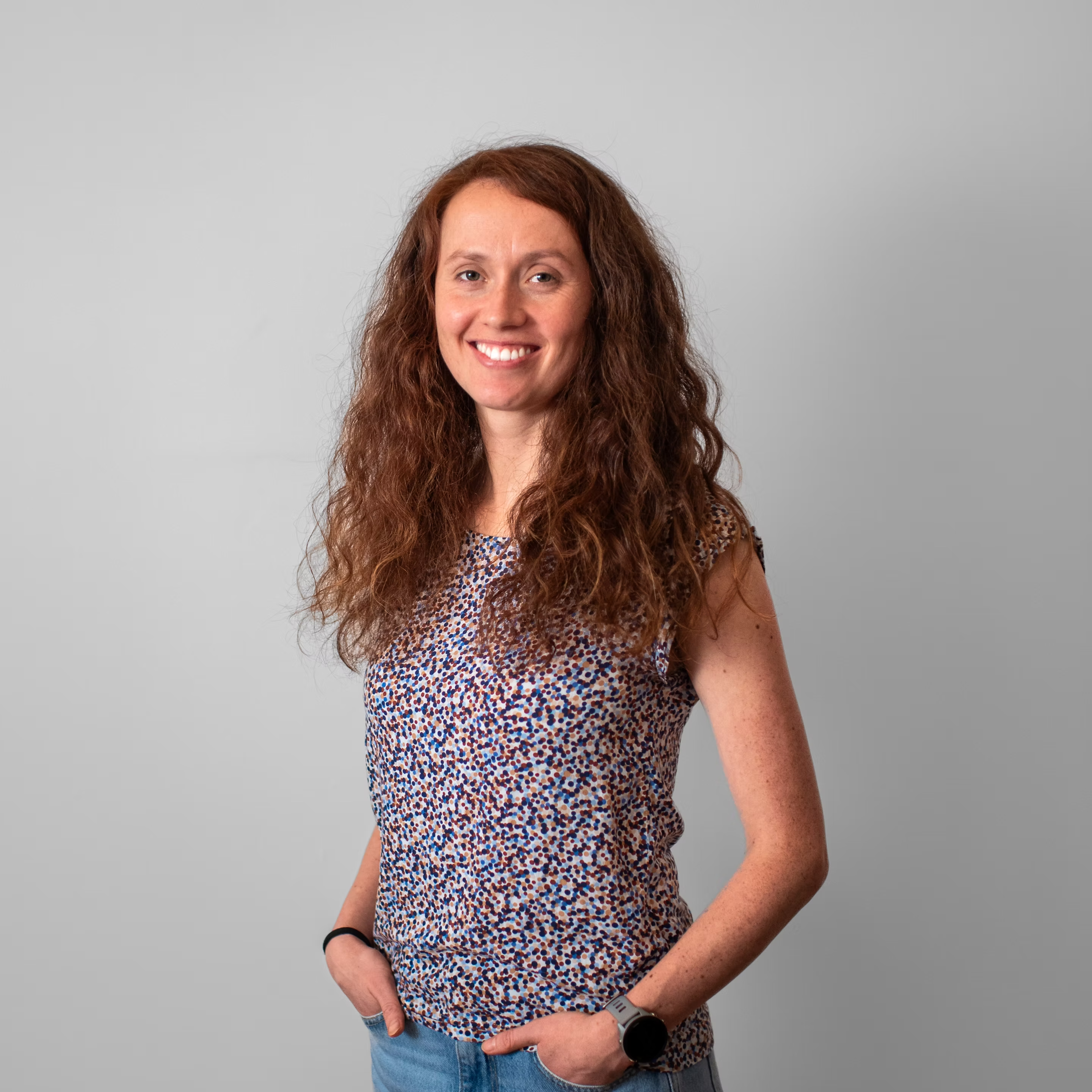
Vendy came to humancraft from a gastronomy company, where she worked as an internal HR professional and focused, among other things, on people development and learning. She is especially interested in effective team communication, cohesion, feedback, and conflict resolution. Simply put, she likes people and enjoys helping them grow and move forward. A characteristic feature of Vendy’s life is balancing multiple projects. In the past, that meant combining a career as an orienteering runner with her work in HR; today, it means combining training at humancraft with sports psychology. It is important to her to see meaning in her work and a real benefit for clients. She works with enthusiasm and passion — just as sport taught her to do.
Something personal
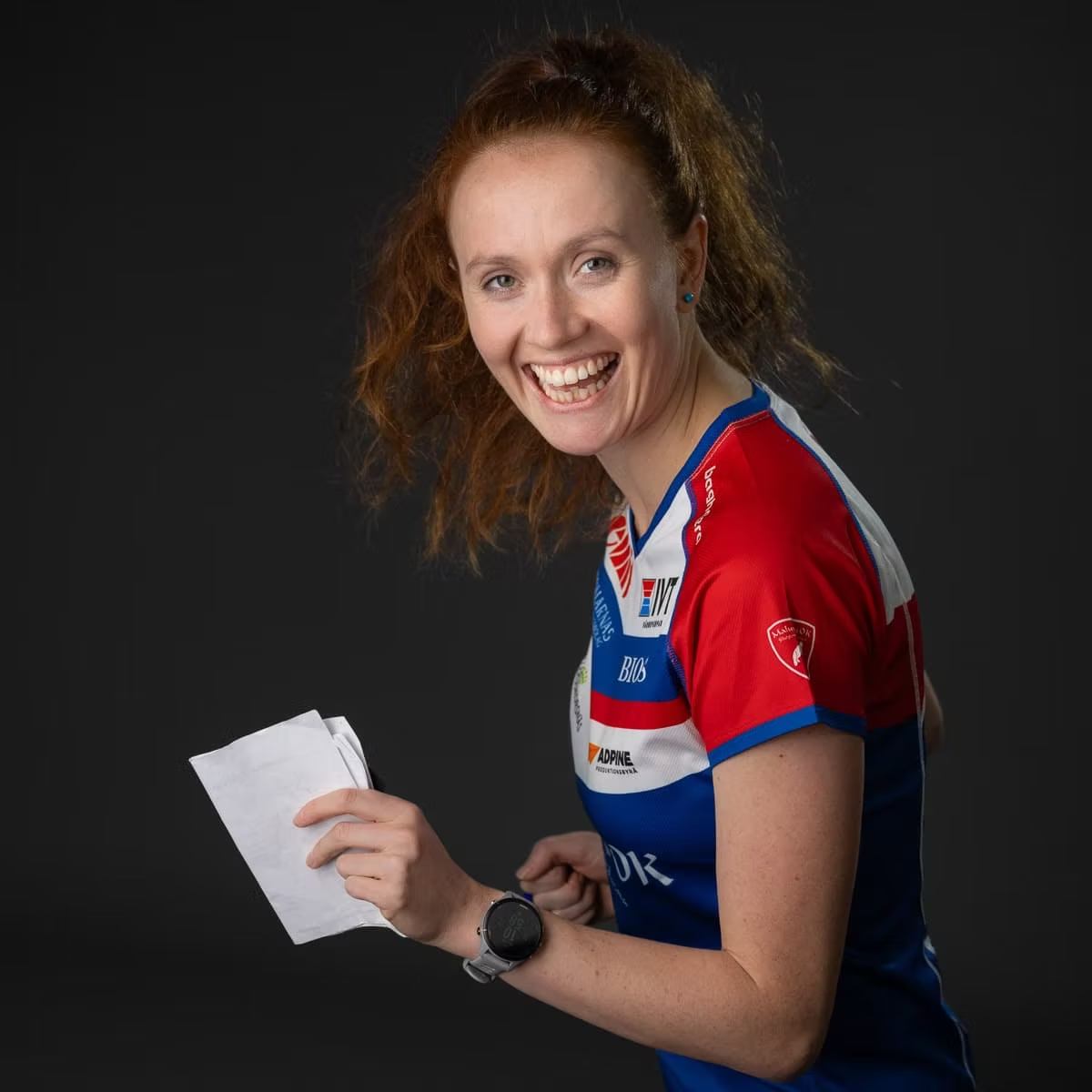
Vendy loves movement of all kinds, preferably outdoors in nature. She grew up with a broad sporting foundation, from cycling to skiing, but over time orienteering fully won her heart. She spent more than fifteen years on the national team, and even today you are most likely to meet her at races with friends on the weekend. Orienteering is simply a lifestyle, and it has nurtured in her a love and respect for both nature and people. It also taught her that nothing happens instantly, and that patient work leads to the goals we set. Her love of Scandinavian countries is probably connected to orienteering as well. She is learning Swedish, rests best in nature, and likes autumn most of all. She also enjoys discovering other places, flavours, and human stories while travelling wherever life takes her. She does not keep a list — there are so many beautiful places on Earth, so she simply waits to see which one catches her attention next.
1) How would you describe your job in one sentence?
Showing people what they are capable of learning.
2) What has influenced you in life, and how does it show up in your work?
I was influenced by my previous job, where I spent four years leading HR in the Brno gastronomy group Lidi z Baru, and where my boss was Honza Vlachynský. I learned a lot there about communication, argumentation, and discussion with different types of people. I also learned about putting teams together and leading them. And, given that we had to get through COVID, I certainly learned a lot about conflict resolution and crisis management as well. I was also responsible for people development there, which eventually led me to humancraft.
Before that, school definitely had an influence on me — or rather, the people there did. I studied psychology at the Faculty of Social Studies, focusing on work and organizational psychology during my master’s degree, and we had great teachers: passionate people who truly wanted to pass on what mattered.
And then, more or less throughout my whole life, there was sport. I spent fifteen years on the national orienteering team, and sport is still the best way for me to rest. I think sport gives you a good foundation for life — fairness, directness, perseverance, hard work, and goal orientation. Last but not least, my family definitely influenced me as well. My mum and dad supported me in whatever I wanted to do, no matter what it was.
3) Why do you work for humancraft?
Because of the people.
4) What has been your biggest challenge at humancraft so far?
Starting. Telling myself that this is something I really want to do and could do, applying for the selection process, and making it through.
5) How does your work influence your personal development and career?
This work keeps moving me forward because I keep meeting new people. Every training session is a challenge — you never know exactly who will come and what it will be like. And after every training session, I feel enriched: by new experiences, moments, and stories. For me, these are exactly the things that shape me in life, make me reflect on how I do things and who I am, and help me develop both personally and professionally.
6) What are the biggest challenges in corporate education today, and how is humancraft addressing them?
I think one ongoing challenge is transferring things from training into everyday working life. It is one thing to see something in isolation during a training session, and another to actually change something at work, where people already have established routines.
That is why we try to make our training sessions as practical as possible, so that people experience what it really feels like to do the thing — which is much stronger than just talking about it. We then discuss with them what, specifically, they will change at work. One small thing is enough, but it is important to do it regularly so that it becomes a habit. Because in the end, our habits are what shape our lives.